


Description
Disclaimer: This product is not intended to cure, treat, or alleviate any disease, ailment and or condition. Please see the FDA Import Alert 54-15. All of our products are for lab research use only. Not for human or animal consumption. Big Bear Kratom makes no representations as to intended use of our products. Please see our Product disclaimer and our Terms Of Service.
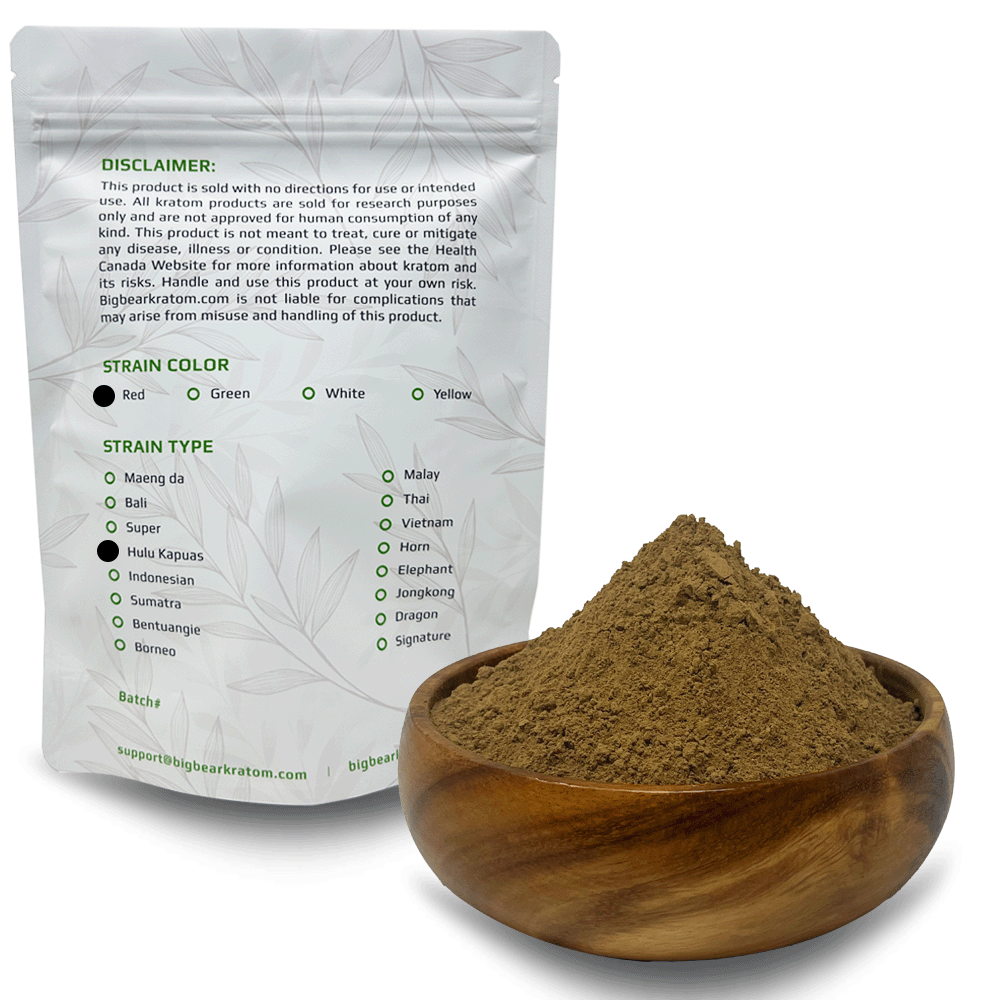
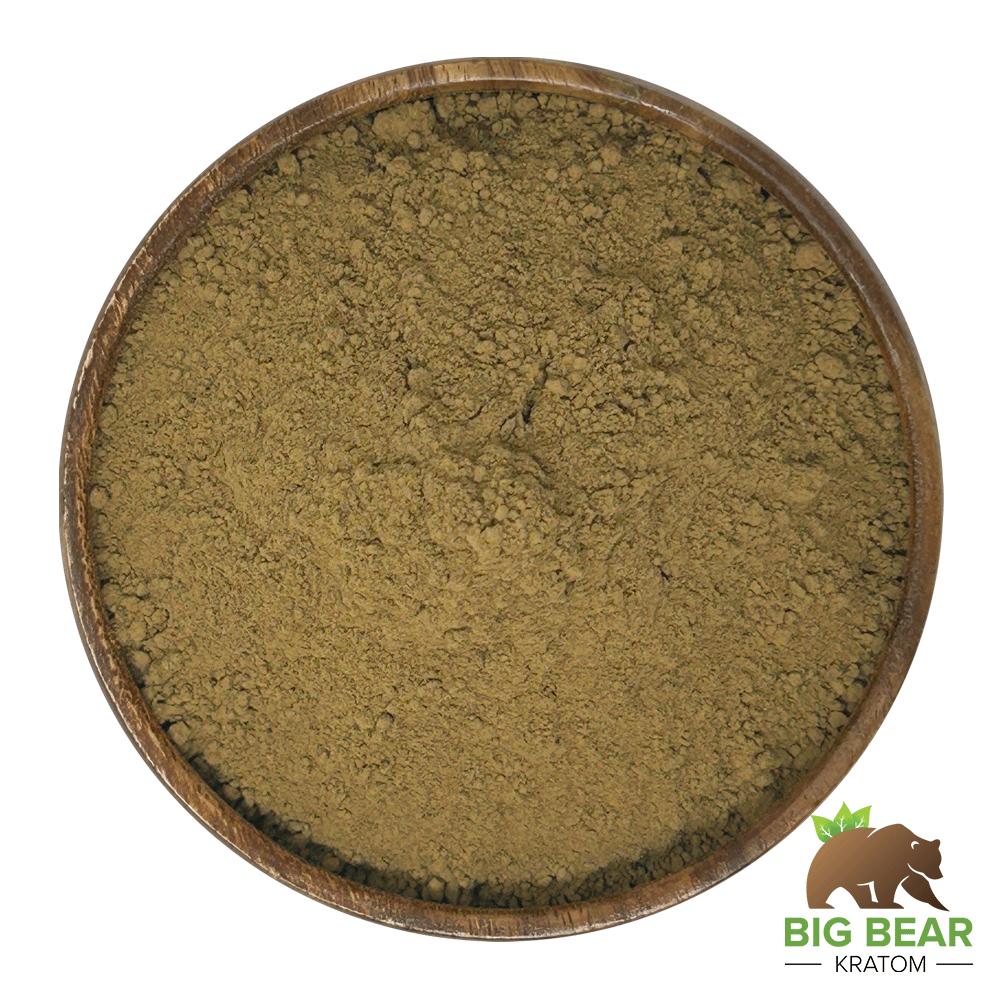
Red Hulu Kapuas Kratom is a red vein strain sourced from regions near the Kapuas River in Indonesian Borneo. It is a type of red kratom strain that is extracted using the mature leaves of the Mitragyna speciosa tree.
This strain is commonly distinguished by its local origin and the processing methods. It can change its overall profile depending on the conditions of cultivation and how it is handled after harvesting.
Understanding Red Hulu Kapuas Kratom
Red Hulu Kapuas Kratom develops from mature leaves cultivated in the Kapuas region. It belongs to the red vein classification due to its reddish coloring of the vein structure.
The processing technique is aimed at preserving the natural alkaloid content. Controlled drying methods can also influence the appearance of the strain in various batches.
Naturally occurring alkaloids can add to the characterization of this strain. These features may vary depending on sourcing and handling factors.
Why Explore Red Hulu Kapuas Kratom?
Red Hulu Kapuas Kratom is commonly compared to other red vein strains in terms of origin and processing. This helps in understanding regional differences within the same category.
- It belongs to a group of Indonesian red vein varieties with differences in sourcing and processing methods.
- When discussing Red Hulu Kapuas Kratom research benefits, it is commonly concerned with consistency and general profile as opposed to specific final product.
- A Red Hulu Kapuas Kratom review tends to mention its harvesting and processing methods in the broader red vein category.
- The powder form is easier to handle and measure, depending on the preferences and the methods of research.
Key Characteristics of Red Hulu Kapuas Kratom
Red Hulu Kapuas Kratom may be different according to how it is analyzed and different individuals preferences. Such differences influence the position of the strain in the red vein category.
- It is usually has more moderate aromas in comparison to the other types of veins.
- The strain is sourced from mature leaves, which also provide it with its overall structure and its classification among red varieties.
- In some instances, it might develop at a slower pace. However, these characteristics can shift depending on sourcing and processing conditions.
Quality and Processing Standards
The overall profile of Red Hulu Kapuas Kratom depends on how it is cultivated and processed. These practices are used to ensure consistency and integrity of the product.
Packaging is designed to ensure that the product is not exposed to environmental factors during storage so that its overall condition is preserved over time.
Canadian regulations state that Red Hulu Kapuas Kratom is not to be consumed by humans, and it is offered strictly for research and botanical purposes. Compliance and product integrity are supported by proper labeling and handling practices.
Storage and Care of Red Hulu Kapuas Kratom
- The Red Hulu Kapuas kratom techniques can differ depending on familiarity and preference. This gives an opportunity to control and prepare more carefully.
- Some of the common techniques are preparing the powder in a form that may be used in observation, research or aromatherapy. These methods can be different according to the way the material is handled.
- New kratom researchers would usually analyze with smaller quantities to learn how to measure in general. Adjustments can be made over time according to personal preferences and experience.
- The quality of the product can be preserved by storing Red Hulu Kapuas Kratom in a dark, dry location that is not in direct contact with sunlight. Adequate storage is also considered to preserve its overall condition.
Red Hulu Kapuas Kratom: A Distinct Red Vein Strain
Red Hulu Kapuas Kratom is influenced by its source and the post-harvesting techniques. These are some of the factors that contribute to its classification under the red vein category.
When examining the sourcing and preparation disparities, it is usually compared to other red vein strains. This simplifies the observation of the variation of strains by region.
Some kratom enthusiasts look to buy Red Hulu Kapuas Kratom online at a place where the batch traceability and quality of the product are clearly stated.
Related Red Vein Kratom Strains
1. Red Vein Borneo Kratom
Red Vein Borneo gets its name from the Borneo area in Indonesia, where this strain is widely obtained. It is frequently mentioned together with Red Bali when referring to well-known red vein varieties.
The climate in this area favors the stable growth of leaves throughout harvests. This is useful in the context of looking at consistency between red vein strains in Indonesia.
2. Red Vein Bali Kratom
Red Vein Bali is linked with the region of Bali in Indonesia and is a well-known product in the red vein category. It is sometimes considered one of the more widely available types of red veins.
Its uniform appearance in various batches makes it useful as a reference when comparing other strains. This assists in determining variations on regional sources.
3. Red Elephant Kratom
Red Elephant Kratom is identified by its comparatively larger leaf size. This physical trait makes it easier to distinguish during harvesting and sorting.
The broader leaf structure can influence how the material is processed and categorized. This makes it relevant when observing differences in plant structure among red vein strains.
4. Red Horn Kratom
Red Horn Kratom is identified by its horn-shaped leaf edges, which appear as pointed tips along the leaf surface. These features are not present in every harvest and depend on specific growing conditions.
It is sourced from select regions in Southeast Asia where these leaf characteristics develop naturally. This distinct morphology sets it apart from other red vein strains and influences how it is classified within the category.