
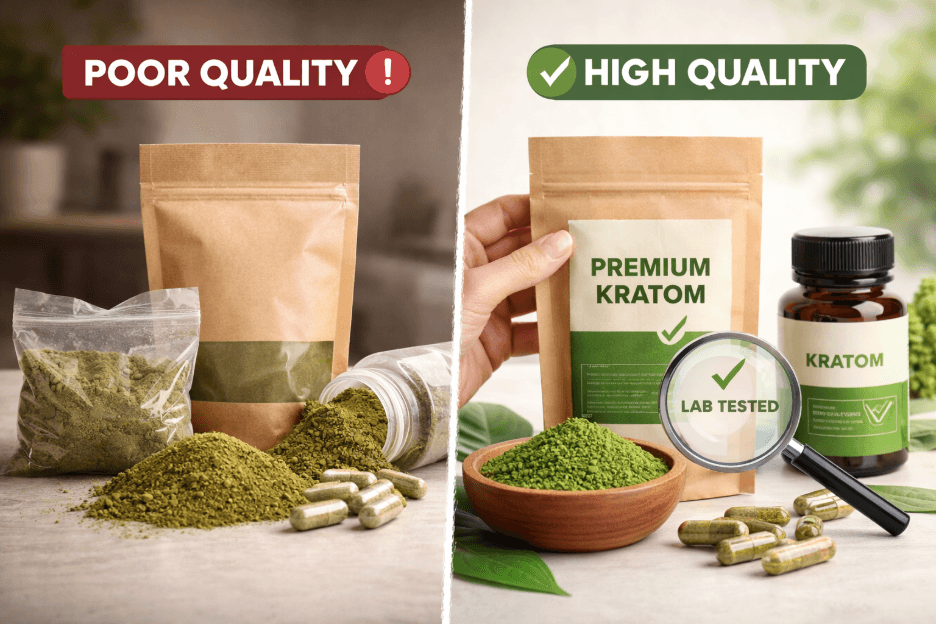
The kratom market in Canada has grown fast. More people are turning to online stores rather than local shops, and that shift has changed how buyers think. The internet gives you access to dozens of vendors, hundreds of products, and more variety than any physical store could carry. But that same access also means more risk if you are not paying attention.
Smart buyers today do not just pick the cheapest option or the first result that comes up. They follow a set of new unwritten rules that help them shop safely, spend wisely, and get a product that actually does what they expect. If you want to buy kratom online with confidence, these are the things worth checking before you add anything to your cart.
1. The COA Is Non-Negotiable Now
A few years ago, lab testing was a nice-to-have. Nowadays, it is a necessity. Reputable vendors should have a Certificate of Analysis to prove the quality of every single product they’re selling. A kratom COA report is a document issued by a third-party testing laboratory that verifies what’s really in the product, the types of alkaloids you’re consuming, and checks for heavy metal poisoning, pesticides, bacteria, etc. If you want to buy kratom online the right way, the COA is the first thing you should look for.
The key term here is “third party.” Lab testing performed by the vendor itself is not third-party testing. You need a document issued by a testing laboratory with no interest in producing positive results. While checking out a vendor’s website, look for a “lab results” page or a “COA” document for each product. If a vendor fails to provide such information, you should avoid it.
 2. What Product Labels Actually Tell You
Reading a label sounds basic, but most people skim past the details that matter most. Smart buyers treat the label as a checklist. A proper label on premium kratom online should include the form (powder, capsule, extract), the weight or serving count, and the country of origin.
The country of origin matters as it is one of the important steps to determine the quality of Kratom along with things like handling, processing, and testing the product. Southeast Asian sources are the most established, but that does not mean all products from those regions are equal. The label should also include a batch or lot number that connects the product to a specific COA. Without that connection, a COA on the website is nearly meaningless because you cannot confirm it applies to the product in your hand.
Kratom product labels should also carry a disclaimer stating that the product is not intended to diagnose, treat, or cure any condition. Also, Kratom is not approved for human consumption in Canada so it should be clearly specified on the package. In Canada, this kind of language is part of responsible product marketing, and its absence can be a red flag.
3. How to Read Vendor Reputation Without Getting Fooled
Online kratom reviews have been one of the best tools a buyer can utilize, but they’re also one of the easiest things to manipulate. Understanding how to separate legitimate reviews from fabricated praise has become an essential part of any quality kratom buying guide.
Here’s what a smart buyer should look for when trying to determine legitimate reviews of a product:
- Verified purchases on review platforms that verify actual purchases of a product
- Specificity in reviews, such as references to strain, form, taste, or shipping speed, as opposed to generic praise
- A range of reviews, such as a vendor with hundreds of five-star reviews and no one-star reviews, as they’re probably hiding their detractors
- Third-party reviews on platforms such as Reddit, Trustpilot, or kratom-specific review sites, as opposed to reviews hosted solely on a vendor’s website
- Response to reviews, both positive and negative, as a vendor who responds to reviews is a vendor who cares.
 4. Sourcing and Supply Chain Transparency
Where kratom comes from and how it gets to you is not a topic most vendors like to talk about openly. That is exactly why trusted kratom brands make it a point to share that information. Kratom sourcing tells you a lot about a vendor’s commitment to quality. Vendors who work directly with farmers, visit their growing regions, or maintain long-term relationships with suppliers may offer more consistent, higher-quality products.
Look for vendors who mention their sourcing practices on their About page, in their FAQ, or in their product descriptions. Do they reference specific regions or farms? Do they describe how they handle import and storage? Do they mention any ethical or sustainable sourcing commitments?
This level of detail can indicate that the company has given serious thought to what goes into its products, rather than just buying from the cheapest bulk supplier and repackaging it.
5. Freshness Is More Important Than Price
Kratom freshness is perhaps the most overlooked aspect of the purchasing process, yet it has a very direct impact on your overall experience. Kratom that has been sitting in a warehouse for a year before it is shipped to you, may influence perceived effects. Alkaloids deteriorate over time, particularly when exposed to heat, light, or moisture.
The table below breaks down what to look for and what to avoid when assessing freshness:
| What to Check | Green Flag | Red Flag |
|---|---|---|
| Harvest or packaging date | Listed on the label or product page | No date information anywhere |
| Product color | Rich green or earthy brown, depending on strain | Pale, faded, or grey tones |
| Smell | Earthy, natural, slightly herbal | Musty, stale, or no scent at all |
| Storage description | Stored in a climate-controlled warehouse | No mention of storage conditions |
| Packaging | Sealed, airtight, light-resistant bag | Thin plastic or unsealed packaging |
Bottom Line
It doesn’t have to be a gamble when you buy kratom online. The rules have become clearer as the industry has grown more mature. There are vendors out there who are serious about quality and will prove it by offering lab results, transparent sourcing, transparent labeling, and actual communication with customers. It’s up to you as a consumer to look for these things before you put your money in anyone’s hands.
Fortunately, Kratom is legal to buy and sell in Canada, but it comes with strict rules from Health Canada. It cannot be sold as a health product or advertised with any health benefit claims, and Kratom Temple follows these same guidelines.