
Key Takeaways
- Red Hulu Kapuas grows along the Kapuas River in Indonesian Borneo, one of the more remote kratom growing regions in the world.
- Seasonal flooding, limited farmland, and low population density keep harvest volumes small, the main reason for its rarity.
- Community reports generally place it within the red vein family, alongside strains such as Red Bali and Red Borneo.
- Kratom is not a controlled substance in Canada, but Health Canada has not approved the sale of kratom products.
- Big Bear Kratom lab tests every batch and ships across the country, priced in Canadian dollars.
Red Hulu Kapuas doesn’t get talked about with the same familiarity as Red Bali or Red Borneo, and that’s not because it’s a lesser strain. It’s because getting kratom out of the Kapuas Hulu region of Borneo is genuinely harder than getting it out of the areas behind those two names. That’s the short version. The longer version involves a regency, a river, and a supply chain that has to work harder for every batch that makes it out. Here’s what that means for Red Hulu Kapuas Kratom and how it actually compares against Red Bali and Red Borneo.
Table Of Contents
- The Story Behind Red Hulu Kapuas Kratom
- What Makes This Strain So Hard To Find?
- Reported Characteristics Of Red Hulu Kapuas
- Red Hulu Kapuas Vs Red Bali Vs Red Borneo
- Quantity And Handling Options
- Legality And Buying In Canada
- Storage Tips For Longer Freshness
- Choose Red Hulu Kapuas Kratom For Your Next Order
- Frequently Asked Questions
The Story Behind Red Hulu Kapuas Kratom
Red Hulu Kapuas comes from the leaves of Mitragyna speciosa. That’s the same tropical tree behind every kratom strain on the market, so the plant itself isn’t unusual. What is unusual is where these particular trees grow.
Hulu Kapuas is the upstream stretch of the Kapuas River, a waterway that runs over 1,143 kilometers and ranks as the longest river on the island of Borneo. It cuts through Indonesia’s West Kalimantan province on its way to the coast.
The Kapuas River Region
The upper Kapuas sits inside Kapuas Hulu Regency. It’s the biggest regency in West Kalimantan by land area, yet also one of the least populated. Farmers harvesting kratom trees here are working in one of the most heavily forested, least developed corners of the island.
- The Kapuas River runs 1,143 kilometers, making it the longest river in Indonesia.
- Kapuas Hulu Regency covers over 31,000 square kilometers with roughly 280,000 residents.
- Protected forest and national park land make up a little over half the regency, close to 56 percent, with most of the remaining forest set aside for timber production rather than conservation.
What Makes This Strain So Hard to Find?
Every kratom strain depends on farmers who plant, harvest, and dry the leaf by hand. This one depends on farmers working somewhere far harder to reach. Low population density means fewer farming families are around to work the trees compared to established areas like Bali or southern Borneo. Put those two things together, and it’s easy to see why Red Hulu Kapuas shows up in smaller, less frequent batches than Red Bali or Red Maeng Da ever do.
Reported Characteristics of Red Hulu Kapuas
Kratom communities and vendors generally place Red Hulu Kapuas within the red vein category. That’s the same broad group as Red Bali, Red Borneo, and Red Maeng Da, and the classification comes from the vein color visible in the leaf before it’s dried and ground into powder.
Most product descriptions mention a darker, reddish brown powder tone compared to other red strains. Open a fresh bag, and the aroma tends to stand out more too, stronger and more noticeable than a lot of other red strains.
How Vendors Describe It
- Darker reddish brown powder compared to many red strains.
- Strong, noticeable aroma right out of the bag.
- Frequently mentioned in community discussions about evening research sessions.
Red Hulu Kapuas Vs Red Bali Vs Red Borneo
A lot of people search Hulu Kapuas vs. Red Bali because both strains sit under the same red vein umbrella, yet they tell a completely different origin story.
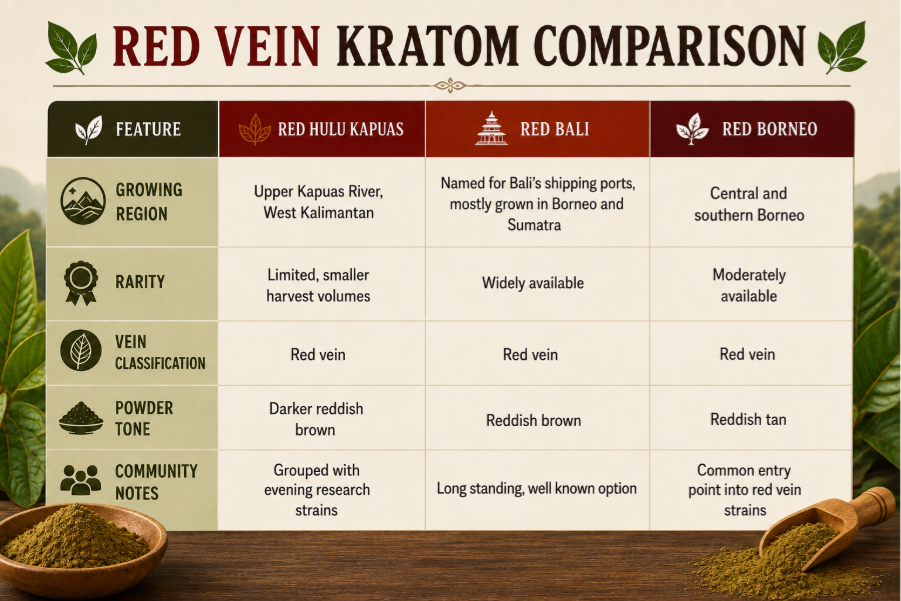
Red Bali is actually a good example of how a name can outlive the facts behind it. Most of that leaf is grown in Borneo and Sumatra, not Bali at all. It only historically passed through Bali’s ports before export, and that’s how the name stuck around. Red Hulu Kapuas skips all of that naming confusion since it’s named directly for the river region it actually comes from.
Storage Tips for Longer Freshness
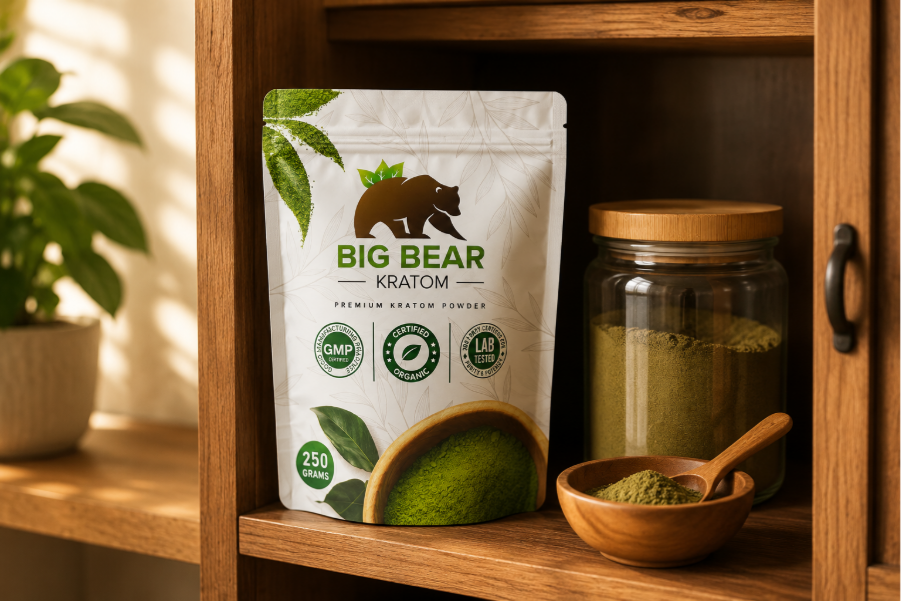
Kratom powder loses quality fast in heat, direct light, or open air. Keep it in a sealed, opaque container inside a cool, dry cabinet, and Red Hulu Kapuas Kratom stays a lot closer to its original condition.
Storage Tips
- Store in a cool, dry place away from direct sunlight.
- Keep the original packaging sealed when not in active use.
- Keep all kratom products out of reach of children and pets.
- Not recommended for individuals who are pregnant or nursing.
Choose Red Hulu Kapuas Kratom for Your Next Order
If you’re comparing red vein options, Red Hulu Kapuas, Red Bali, and Red Borneo are among the strains available at Big Bear Kratom. Each product is sourced directly from producers and tested for heavy metals, pesticides, mold, and bacteria, with lab results available for review. Take a look at the available strains and testing information to find the option that best fits what you’re looking for.