
Key Takeaways
- Green Elephant Kratom comes from unusually large, mature leaves grown mainly in northwestern Sumatra.
- The name is about leaf size and shape. It’s not a separate plant species.
- It sits in the green vein family, and most people place its profile somewhere between white and red vein categories.
- Health Canada hasn’t approved kratom for human consumption.
- Keep it sealed and away from heat and light, and the powder stays fresh a lot longer.
Green Elephant Kratom gets its name from something you can actually see. The raw leaf behind it grows noticeably larger than what most other kratom trees produce, wide and rounded at the edges, close enough to an elephant’s ear that farmers in northwestern Sumatra started calling it that generations ago. The name just stuck.
If you’ve been comparing green vein strains and they’ve started to blur together, knowing where this one’s name actually comes from is a good place to start. Here’s what makes the leaf itself different, how it holds up next to names like Green Maeng Da and Green Borneo, and what buyers across Canada should know before it lands in a cart.
Table of Contents
- The Big-Leaf Origin Behind the Name
- Green Elephant Vein Color and Leaf Profile
- Green Elephant vs Green Maeng Da vs Green Borneo
- Green Elephant Kratom in Canada
- Storage Tips and Shelf Life
- From Sumatra’s Big Leaf to Your Door in Canada
- Frequently Asked Questions
The Big-Leaf Origin Behind the Name
Every kratom strain comes from the same tree, Mitragyna speciosa, grown across Southeast Asia under wildly different conditions depending on the region. Green Elephant Kratom comes from trees in northwestern Sumatra, where farmers let the leaves mature well past the point most other strains get picked. The leaf just keeps growing.
Once it reaches that size, it curls out wide and rounded at the edges, close enough to an elephant’s ear that the name stuck across the industry. A cultivation study published in PLOS ONE found that growing conditions like shade directly affect leaf size, which is why this elephant leaf kratom ends up so much bigger than a standard harvest.
What Does the Big Leaf Mean
- Big leaf kratom like this generally means that fewer individual leaves go into the same amount of powder, since each leaf simply weighs more.
- The leaf goes through the same drying and milling process as smaller-leaf strains. It just starts with bigger raw material.
- Farmers harvest it later in the plant’s maturity cycle than a lot of other green vein strains.
Green Elephant Vein Color and Leaf Profile
Vendors usually describe vein color as white, red, or green as a reflection of when the leaf was picked rather than proof of a different plant type. Green falls somewhere between the earliest and latest harvest points on that scale. That’s where the color of Green Elephant Kratom comes from, despite the unusually large leaf. Once picked, farmers dry the leaves using a mix of natural sunlight and indoor conditions, then mill everything into a fine powder.
Physical Traits Worth Noting
- The vein shows up as a faint green line on the underside of the leaf, easiest to spot before drying.
- A single green elephant leaf usually outweighs a same-size leaf from most other strains, just because it’s thicker.
- Milling turns the dried leaf into a fine, consistent powder no matter how big the original leaf was.
A Balanced Profile Among Green Veins
Green Elephant Kratom is generally noted for a balanced profile, one that sits between the more familiar white and red vein categories. That’s why it gets chosen for both daytime and evening research sessions. People comparing green vein options often describe a milder aroma than you’d get from red vein types, plus leaf density traits that lean closer to white veins.
Green Elephant vs Green Maeng Da vs Green Borneo
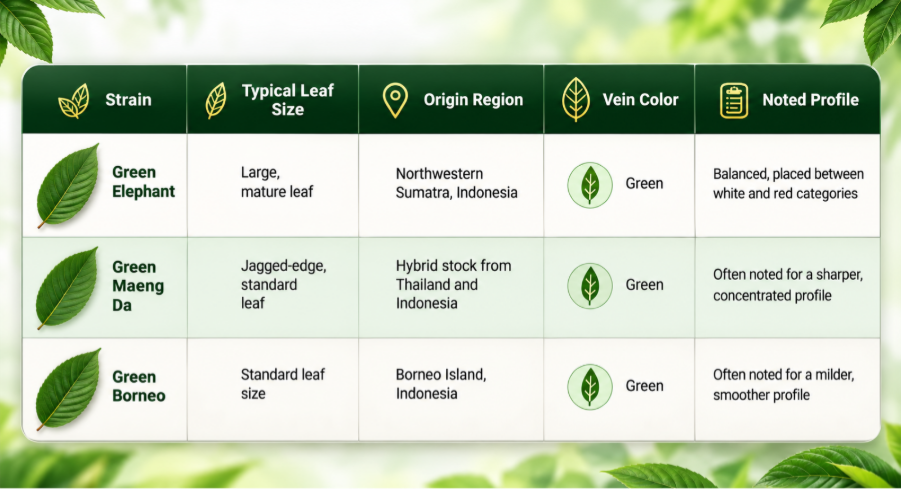
The difference between the Green Elephant, Green Maeng Da, and Green Borneo is mostly about leaf size and growing region, since all three sit in the same green vein category but come from different source trees.
Available Sizes and Formats of Green Elephant Kratom
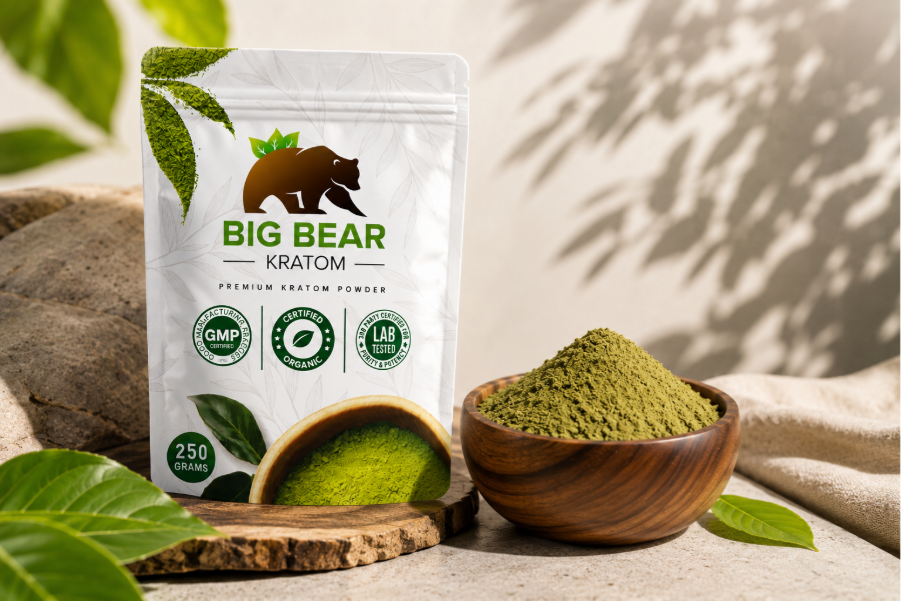
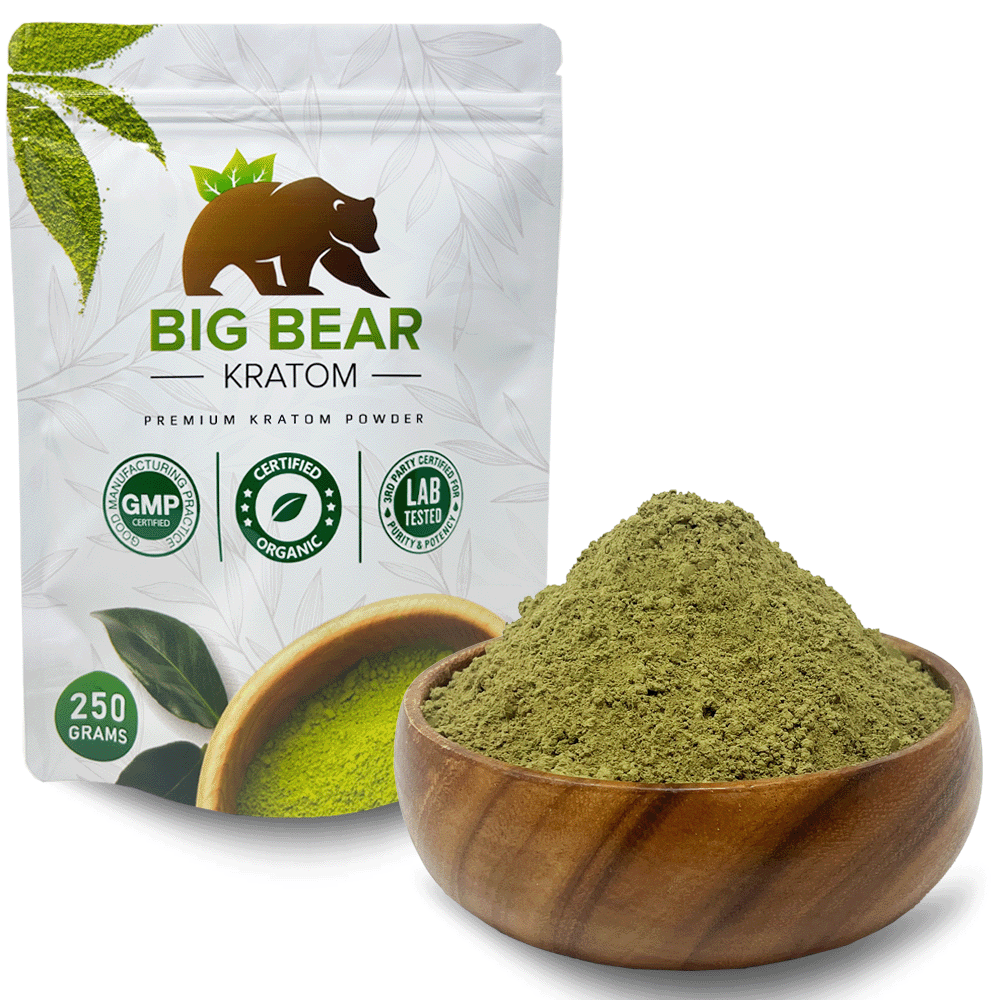
At Big Bear Kratom, this strain comes as a finely milled powder, available in sizes from 25 grams all the way up to 1,000 grams, priced between roughly $10 and $175 CAD depending on size. Every batch we sell gets lab tested for heavy metals, pesticides, mold, and bacteria before it ships.
Green Elephant Kratom in Canada
If you are wondering if it is possible to buy green Elephant Kratom Canada wide or not, the answer is yes. We, at Big Bear Kratom, are an Ontario-based vendor who ships to provinces across the country.
Legal Status of Kratom in Canada
- Health Canada hasn’t approved kratom for human consumption, and it isn’t regulated as a food, drug, or natural health product.
- Kratom isn’t a scheduled controlled substance federally, but sellers still can’t make therapeutic claims, since Health Canada hasn’t approved it as a food, drug, or natural health product.
- No Canadian province currently enforces a strain-specific restriction beyond the federal framework.
Storage Tips and Shelf Life
Moisture and sunlight cause most of the quality loss in kratom powder over time, more than people usually expect. A resealable, airtight container in a cool, dark cupboard beats an open bag sitting on a counter, every time.
Storage Tips
- Reseal the bag, or better yet, move it into a dedicated airtight container right after opening.
- Keep it away from stovetops, windowsills, or anywhere the temperature swings a lot.
- Skip humid spots. A bathroom cabinet is probably the worst place for it.
- Keep it out of reach of kids and pets.
From Sumatra’s Big Leaf to Your Door in Canada
Is Green Elephant Kratom worth putting on your list? If you’ve already compared a Green Maeng Da or a Green Borneo and want to see how a bigger, later-harvested leaf changes things, it’s a solid next one to try.
The easiest way to find out is to start with a smaller size instead of committing to a full kilogram right away. Place an order today at Big Bear Kratom, choosing from every size available, all from the same lab-tested batch, shipped anywhere across Canada.