
Key Takeaways
- Extract powder is a concentrate made from dried leaf. Leaf powder is the whole leaf, milled.
- “MIT” stands for mitragynine. A figure like 60% is the lab-measured share of mitragynine by weight.
- Published research puts mitragynine in dried leaf at roughly 0.75 to 2.7 percent, far below a standardized extract.
- A batch-specific certificate of analysis (COA) is the only reliable way to confirm the number on a label.
- Natural leaf extracts and 7-OH products are separate categories, and regulators treat them differently.
- Health Canada hasn’t approved kratom for human consumption, so at Big Bear Kratom, we sell our extract for research purposes only.
Kratom extract powder is a concentrated product made by pulling alkaloids out of dried Mitragyna speciosa leaf and drying what’s left into powder. Regular kratom powder is the whole leaf, dried and milled, and it doesn’t carry a standardized alkaloid number the way an extract does.
Most buyers notice the price difference first. A pouch of leaf powder holding far more product can cost less than a 5 gram tin of extract. Neither price is a mistake, because the two products aren’t the same thing.
Leaf powder is dried leaf, ground fine. Extract is what’s left after a producer separates the alkaloids from the plant fiber and measures what they’ve got. This is also why a kratom extract label often shows a term like “60% MIT,” which leaf pouches rarely carry. Once you understand that number, the rest of the label and its lab report are much easier to follow.
Table of Contents
- How Extract Powder Is Made
- Kratom Leaf Powder vs Extract Powder
- What Is MIT in Kratom?
- Natural Leaf Extracts vs 7-OH Products
- How Canadian Rules Apply to Extracts
- A Measured Extract From a Canadian Seller
- Frequently Asked Questions
Quick Answer: Kratom extract powder is a concentrated product made from dried kratom leaf and standardized to a lab-measured mitragynine percentage, such as 60% MIT. Regular kratom powder is the whole leaf, dried and milled, with alkaloid levels that vary naturally from batch to batch.
How Extract Powder Is Made

Every extract begins as a plain dried leaf. In most cases, the producer soaks it in a solvent, which pulls the alkaloids out of the plant material. They filter off the spent leaf, remove the solvent, and let the concentrate dry down into powder. That’s the general idea. The details differ from one manufacturer to the next, and plenty of them won’t share their process at all.
At Big Bear Kratom, the extract comes from a manufacturing partner that doesn’t publish its extraction process, which is common in this industry. Some sellers call this kind of product a mitragynine extract powder, after the alkaloid the process targets. Our extract is a freebase mitragynine concentrate made from leaf harvested at maturity, and labs test it at four separate stages:
- The raw leaf powder, before any processing starts.
- The batch, right after extraction.
- The extract again, once it lands in North America.
- One last check at our Canadian distributor.
Kratom Leaf Powder vs Extract Powder
So how is kratom extract powder different from regular kratom powder? The table below compares the two across six points.
| Feature | Regular Leaf Powder | Extract Powder |
| Source material | Whole dried kratom leaf | Dried leaf, processed to separate alkaloids |
| Processing | Dried and milled | Solvent extraction, filtering, and drying (methods vary) |
| Standardized alkaloid % | Not standardized, since mitragynine varies by tree, region, and season | Standardized to a stated mitragynine percentage, such as 60% |
| Texture and color | Fine green to olive powder | Fine powder, often a different shade from leaf, depending on the process |
| What the label or COA shows | Strain, vein color, contaminant screening, and sometimes a mitragynine reading | Mitragynine percentage by weight, batch number, contaminant panel |
| Price per gram at Big Bear Kratom | Roughly $0.18 to $0.40, based on listed pouch prices | Roughly $13 to $15, based on listed tin prices |
The price per gram looks very different, but the two figures aren’t directly comparable. Each gram of extract takes a large amount of leaf, plus extra processing and testing. Leaf powder and extract are different products, sold in very different sizes.
What Is MIT in Kratom?

MIT is shorthand for mitragynine, usually the most abundant alkaloid in Mitragyna speciosa leaf. When a tin says 60% MIT, a lab measured mitragynine at 60 percent of the powder’s weight.
Leaf powder contains much less mitragynine by weight. Researchers who tested Thai kratom leaves for a 2022 study in Frontiers in Plant Science found 7.5 to 26.6 milligrams of mitragynine per gram of dry leaf, roughly 0.75 to 2.7 percent. That range also moved with conditions like light, humidity, and soil. This is why leaf labels usually do not print a percentage while extract labels almost always do.
The percentage only describes what the powder contains. It isn’t a quality grade, and it doesn’t rank one batch above another.
Why a COA Should Confirm the Number
Anyone can print 60% on a tin. A certificate of analysis turns that number into something you can check. A good one should show a few things:
- A Mitragynine result at or above the stated percentage.
- A batch or lot number that matches your tin.
- Screening results for heavy metals, microbes, and other contaminants.
- The testing lab’s name and a test date.
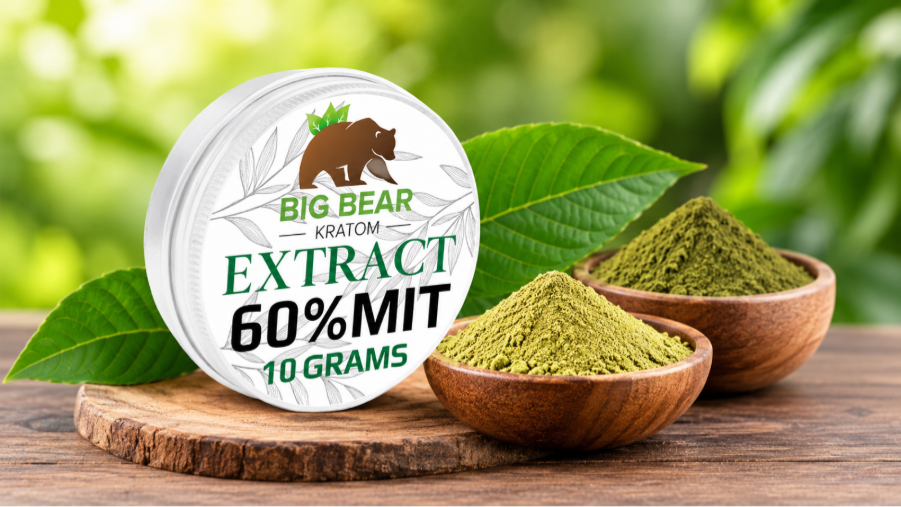
Our 60% MIT extract powder ships in 5 gram and 10 gram metal tins, and its batches consistently test above the 60% mitragynine mark it’s guaranteed to meet.
Natural Leaf Extracts vs 7-OH Products
7-hydroxymitragynine, usually shortened to 7-OH, occurs naturally in kratom leaf, but only in trace amounts. Some products on the market contain far more than that. Either the manufacturer concentrated it, or they made it semi-synthetically from mitragynine. Those products belong in a separate category from an extract made from a natural leaf.
The lab report shows which kind of product you’re looking at. A natural-leaf extract should list mitragynine as its main alkaloid, not 7-OH. That difference between natural leaf alkaloids and semi-synthetic 7-OH products is the main reason to check the COA closely.
How Canadian Rules Apply to Extracts

Extract sits in the same spot as leaf powder under federal rules. Health Canada has not approved kratom as a food, drug, or natural health product, and the Controlled Drugs and Substances Act doesn’t list it. That’s why sellers of kratom extracts Canada wide list these products for research purposes only.
There’s also no Health Canada standard for how extract labels should read. For anyone comparing kratom extract Canada listings, a seller’s own testing ends up being the clearest quality signal on offer. A percentage with no lab report behind it doesn’t tell you much.
A Measured Extract from a Canadian Seller
Leaf powder and extract come from the same plant, but they carry very different labels, lab reports, and prices. A trustworthy extract states its number and proves it with a batch-specific COA.
Anyone ready to buy kratom extract Canada wide can compare our kratom extract powder with its lab results, backed by free shipping over $80 and a 30-day satisfaction guarantee. Place your order today, and we’ll ship it anywhere in Canada with a handwritten note in the box.